








It is common practice to refer to both thermocouples and resistance temperature detectors (RTDs) as temperature sensors, but in fact they are two different things. This page mainly discusses thermocouple wiring types, not RTDs. If this causes any misunderstanding, we apologize.
Thermocouples are widely used because of their broad measurement range and versatility. More importantly, they are relatively low in cost (for types that do not contain precious metals), making them one of the most popular temperature measurement instruments. Today, thermocouples come in many different wiring types. Since each type produces a different output signal, it is important to consider what type of thermocouple the original equipment uses during installation. When designing equipment, how should one choose the appropriate type? The following is a summary of various thermocouple wiring types for your reference.
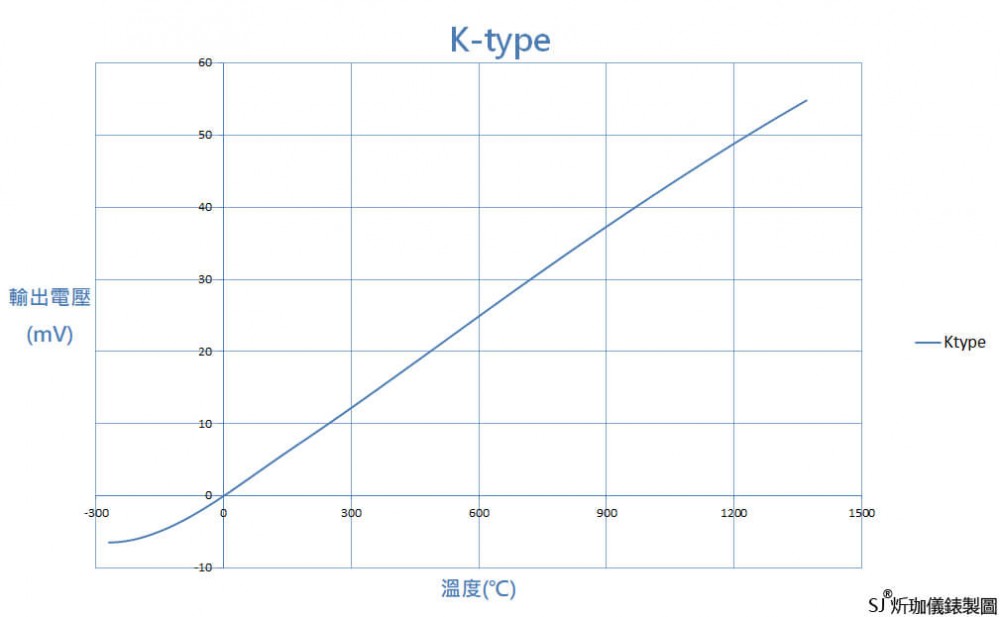
1. K Type (Type K, Nickel-Chromium / Nickel-Aluminum Alloy)
K Type is the most widely used thermocouple type due to its low cost and wide measurement range (from -200°C to +1000°C). It has a sensitivity of approximately 41 μV/°C, making it easy to detect, and it does not place excessive load on the system at high temperatures. In general, unless there are special requirements, K Type is the preferred choice.
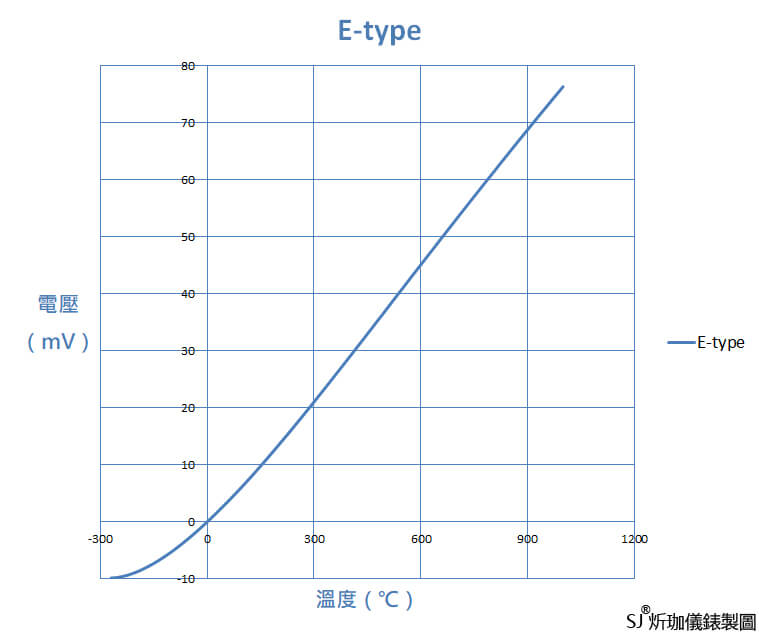
2. E Type (Type E, Nickel-Chromium / Copper-Nickel Alloy)
E Type has a relatively high output (68 μV/°C), making it suitable for low-temperature measurement. It can measure temperatures close to absolute zero, and is typically used in the range of -200°C to 900°C. In addition, since both terminals are non-magnetic, a magnet cannot be used to distinguish the positive and negative poles.
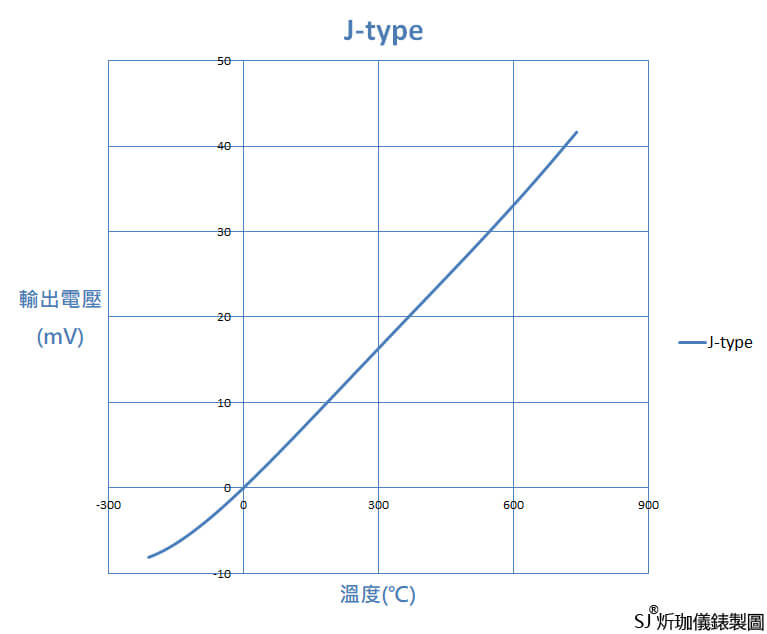
3. J Type (Type J, Iron / Copper-Nickel Alloy)
J Type is an earlier thermocouple type and is now less commonly used. It is mainly found in older equipment that cannot accept other thermocouple signals. Due to its limited measurement range (-40 to +750°C), it has largely been replaced by K Type. Its sensitivity is approximately 52 μV/°C. J Type should not be used above 760°C, as its magnetic properties may change suddenly, leading to a permanent loss of accuracy.
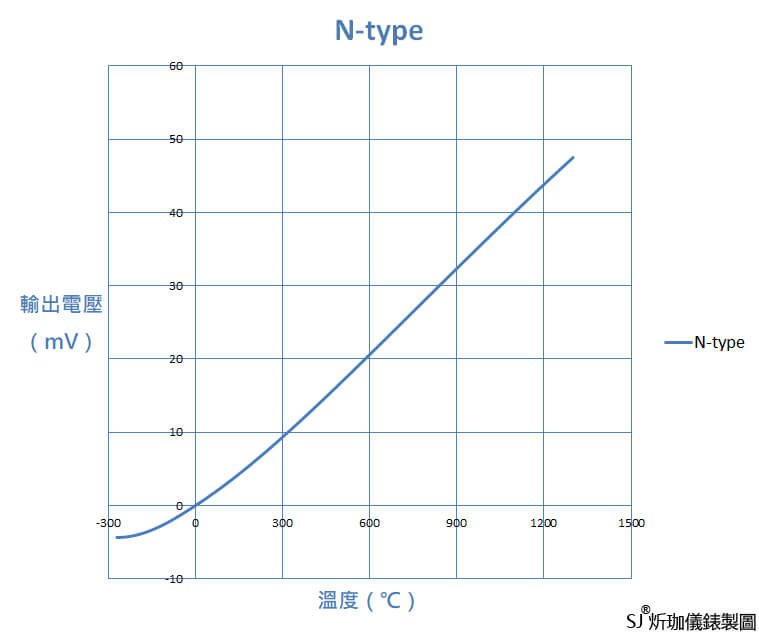
4. N Type (Type N, Nickel-Chromium-Silicon / Nickel-Silicon Alloy)
N Type offers high stability and excellent oxidation resistance at high temperatures, making it suitable for high-temperature applications. Its sensitivity is approximately 39 μV/°C, and it can be considered an upgraded version of K Type. Like K Type, it does not contain precious metals, which has contributed to its increasing popularity. The measurement range is from -200°C to +1200°C.
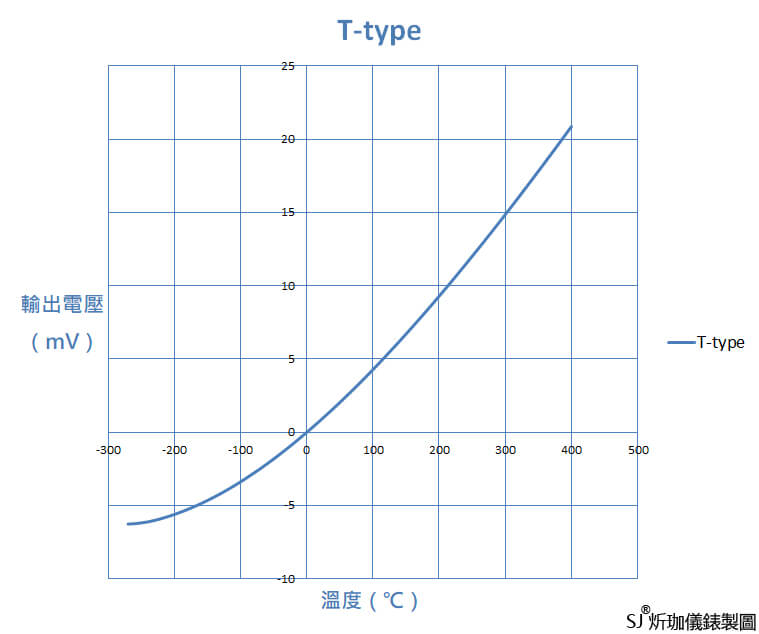
5. T Type (Type T, Copper / Copper-Nickel Alloy)
T Type is best suited for low-temperature measurement, with a sensitivity of approximately 43 μV/°C. It offers high sensitivity, nearly linear temperature response, good repeatability, excellent long-term stability, and low cost. However, the copper positive leg has poor oxidation resistance at high temperatures, which limits its maximum operating temperature. Once it exceeds 400°C, the positive leg is prone to oxidation and damage. The measurement range is from -250°C to +350°C.
6. B, R, S Types (Noble Metal Thermocouples, Platinum / Platinum-Rhodium Alloys)
These three types are quite similar and are all suitable for high-temperature measurement with excellent stability. However, due to their high cost, they are not commonly used. S Type offers the highest stability, response speed, and sensitivity among the three, and is often used as a reference thermocouple for calibration. It can be used continuously up to 1300°C and up to 1600°C for short periods. B Type is relatively more durable, but due to its temperature-voltage characteristics, it is less commonly used. R Type is similar to S Type and can be used for measuring higher temperatures. However, it is more expensive and requires additional protection such as protective tubes, so it is also not commonly used.
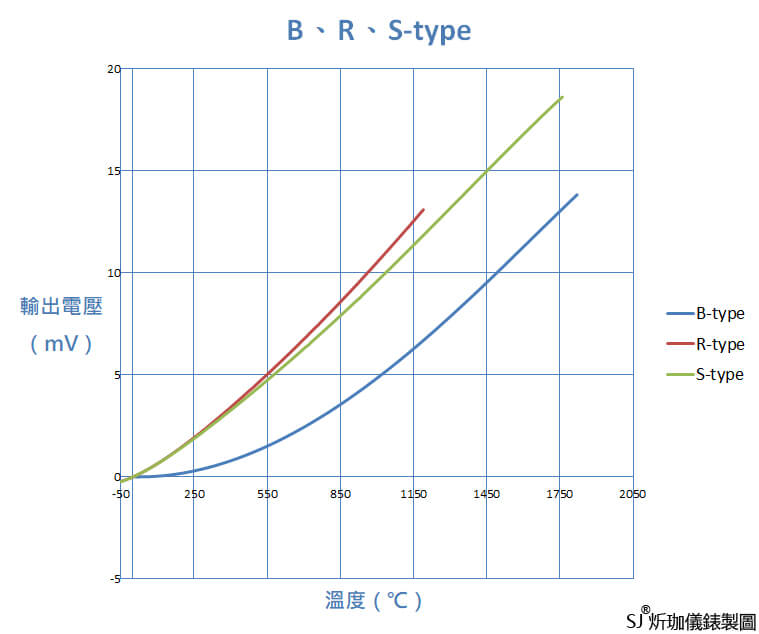
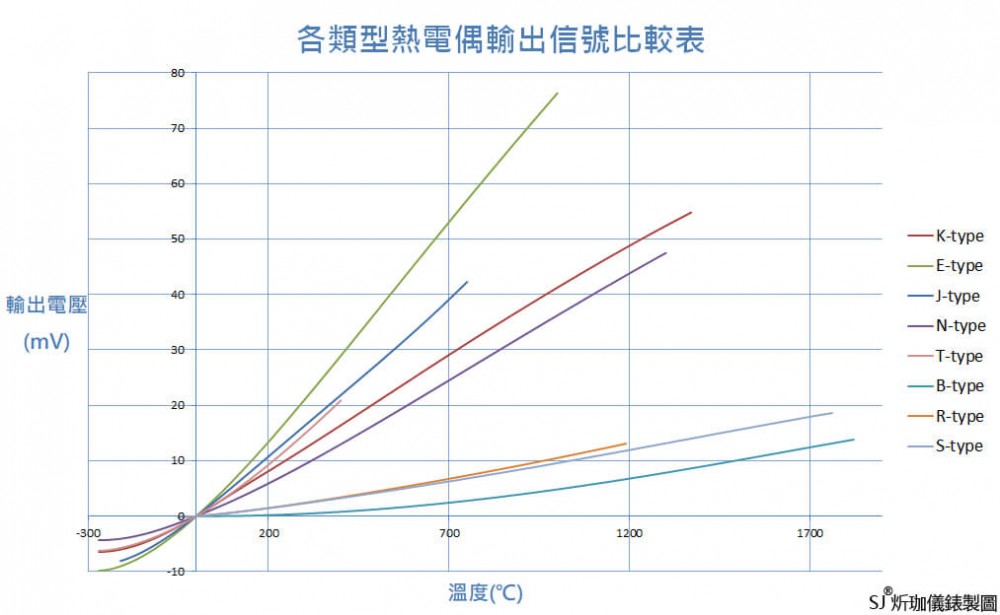
7. Thermocouple Output Signal Comparison Table
To help you compare the differences in output signals among various thermocouple types, we have organized them in the table on the right.