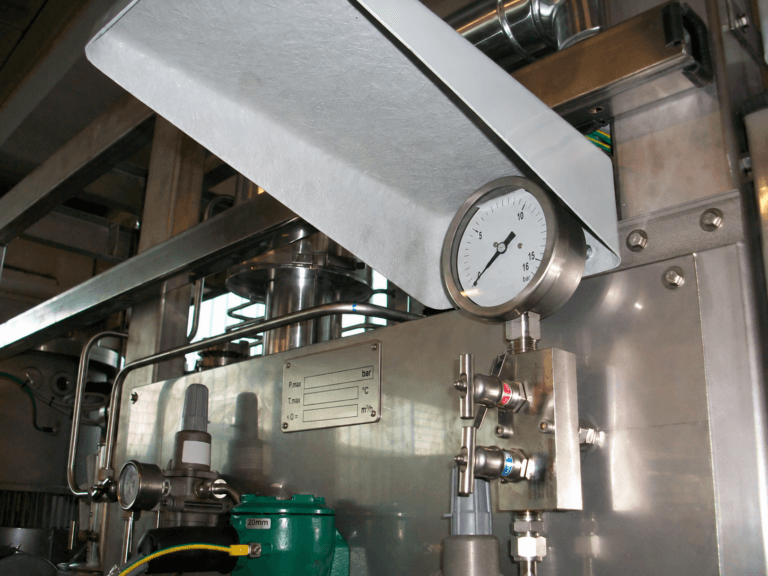









A vacuum gauge is used to measure the vacuum level inside a system. In general, atmospheric pressure is taken as the reference zero point, so under standard atmospheric pressure at sea level, the maximum reading of a vacuum gauge is about -760 mmHg (or -76 cmHg), which represents a near-perfect vacuum condition. However, in actual use, many people find that the vacuum gauge often cannot reach -760 mmHg. This does not necessarily mean the gauge is defective. In many cases, it may be related to the condition of the equipment, the installation, or even the surrounding environment. Below are some of the most common reasons.
1. The Vacuum Gauge Itself Is Faulty
A vacuum gauge is a relatively sensitive instrument and is not resistant to impact. If it is bumped or dropped during transportation, installation, or use, problems such as failure to return to zero, inaccurate readings, or measurement deviation may occur. For this reason, each vacuum gauge should be inspected before shipment to ensure that it functions properly. It should also be carefully protected during transportation and installation to avoid damage caused by collision. If the gauge itself has been damaged, it may fail to display the correct reading even when the system vacuum level is normal.
2. The Piping or Fittings Are Not Completely Sealed
Vacuum measurement is highly affected by atmospheric pressure. If there is even a very small leak in the vacuum system that allows air to enter the pipeline, the system will not be able to reach the desired vacuum level. Therefore, if you want the vacuum gauge to approach its maximum vacuum reading, you must make sure that the entire process, from the vacuum pump and piping to the fittings and the gauge itself, is fully sealed. Even a minor leak at one connection point can prevent the gauge from reaching -760 mmHg.
3. The Vacuum Pump or Vacuum Motor Has Performance Limitations
Some vacuum pumps are designed to reach only a near-vacuum condition rather than a true theoretical full vacuum. In addition, if the pump is old, worn, or poorly maintained, its vacuum performance may decline over time. In other words, even if the gauge is working properly and there is no leakage in the system, the vacuum level may still fall short of the ideal value if the pump itself cannot perform at full capacity.
4. The Pressure Inside the Gauge Case Is Not Balanced with Ambient Pressure
This issue does not always prevent the gauge from reaching -760 mmHg, but it can cause inaccurate readings. If the inside of the gauge case is sealed and not ventilated to the outside environment, the internal case pressure may differ from the surrounding atmospheric pressure, causing the measurement zero point to shift. In some cases, if the temperature inside the gauge case rises and there is no air exchange, the internal pressure may become slightly higher than the outside pressure, causing the pointer not to return to zero or leading to measurement errors. In these situations, the solution is usually simple: open the fill plug or vent so that the pressure inside the case can equalize with ambient pressure, allowing the gauge to measure more accurately.
5. The Effect of Atmospheric Pressure and Altitude
Many people assume that a vacuum gauge must read -760 mmHg in order to be considered normal, but this is actually based on standard atmospheric pressure at sea level. Standard atmospheric pressure refers to the absolute pressure measured at sea level, which is approximately 760 mmHg. However, because the zero point of a vacuum gauge is based on the surrounding atmospheric pressure, it will change depending on the altitude of the measurement location. For example, at an altitude of around 240 meters, the local atmospheric pressure may only be about 740 mmHg. In this case, even if the inside of the pipeline has reached a near-complete vacuum, the vacuum gauge may only indicate -740 mmHg rather than -760 mmHg. This means that a vacuum gauge reading below -760 mmHg is not always a sign of equipment failure; it may simply reflect the natural effect of local atmospheric conditions.
Conclusion
Overall, a vacuum gauge is a sensitive measuring instrument that can be influenced by many external factors, including the condition of the gauge itself, the sealing performance of the piping system, the capability of the vacuum pump, the pressure balance inside the gauge case, and changes in atmospheric pressure caused by altitude. Therefore, when a vacuum gauge cannot reach -760 mmHg, it should not automatically be assumed that the gauge is defective. Instead of repeatedly replacing the gauge, it is better to first check the possible causes above in order to identify the real problem and avoid unnecessary time and cost.