








SJ Gauge has many years of professional experience in measuring pressure and temperature. In this article, we will share with you how to interpret pressure gauges. We will also provide guidance on how to handle damaged pressure gauges. Furthermore, we will discuss the six common causes of pressure gauge failure, allowing you to gain a comprehensive understanding through this article.
If you are interested in the topic of this article, please continue reading. Feel free to ask any questions or directly contact us. SJ Gauge is dedicated to providing you with the best answers and solutions.
1. What causes pressure gauges to fail?
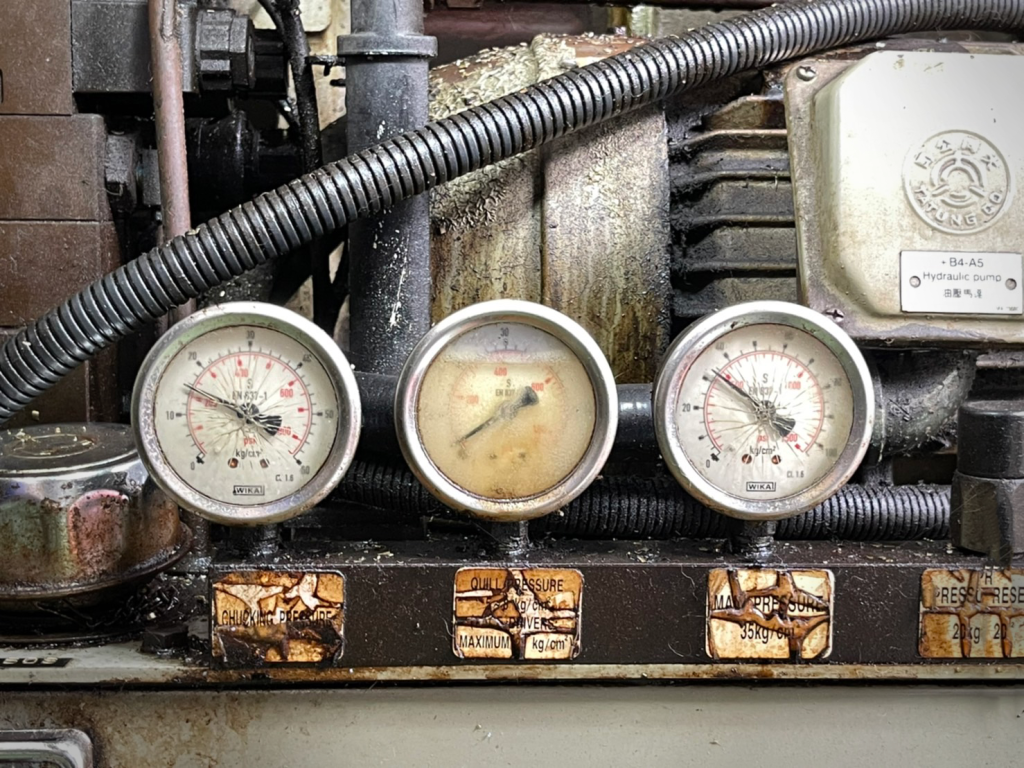
Pressure gauge failures stem from various factors, most of which are linked to improper operation and human error. These issues can be effectively avoided with a thorough understanding of the instruments and careful handling. This article covers the common causes of pressure gauge failure and provides actionable prevention methods. For further guidance on compliance standards, please refer to ASME B40.100-2013 and EN837-1.
(Further Reading: ASME B40.100-2013 Pressure Gauges and Gauge Attachments)
(Further Reading: DIN EN 837-1:1997 Pressure gauges – Part 1: Bourdon tube pressure gauges – Dimensions, metrology, requirements and testing)
2. The six main reasons for pressure equipment failure.
2-1. Excessive vibration/pulsation
Reason:
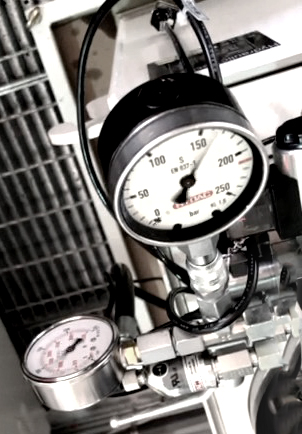
Equipment vibration and sharp pressure fluctuations are the primary causes of gauge failure. Mechanical vibration triggers pointer flutter and elevates stress on the Bourdon tube, leading to long-term gear wear. Meanwhile, pressure surges and pulsations from frequent valve actuation compromise readability, bend pointers, break stop pins, and degrade the overall structural integrity of the components.
Solution:
Mounting the instrument further from the source using a PRA-CL capillary tube effectively reduces vibration. To mitigate pulsation, liquid-filled gauges can be used as a dampening solution; if liquid filling is not feasible, installing a PRA-SB pressure snubber can efficiently dampen the process media flow.
(Further Reading: PRA-CL Capillary for Pressure Gauge)
(Further Reading: PRA-SB Pressure Snubber)
2-2. Extreme high/low temperatures
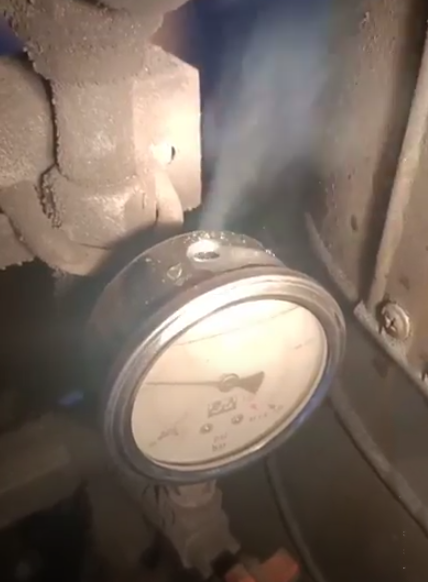
Reason:
When ambient or process media temperatures exceed the gauge’s limits, the dial, window, and fill liquid easily discolor, while gaskets harden and crack, causing leaks at the rubber vent plug or other areas. This can even rupture the Bourdon tube, risking operator injury. Conversely, sub-limit temperatures congeal the fill liquid, resulting in sluggish response times or inaccurate readings.
Solution:
Installing air conditioning, heating systems, or sprinklers helps maintain a stable ambient temperature. To control the process media temperature, a PRA-SP stainless steel siphon tube, heater, or water-cooling system can be implemented; if space is limited, the PRA-C cooling element serves as an excellent alternative.
(Further Reading: PRA-SP Stainless Steel Siphon Tube)
(Further Reading: PRA-C Cooling Element for Pressure instrument)
2-3. Pressure spikes/overpressure
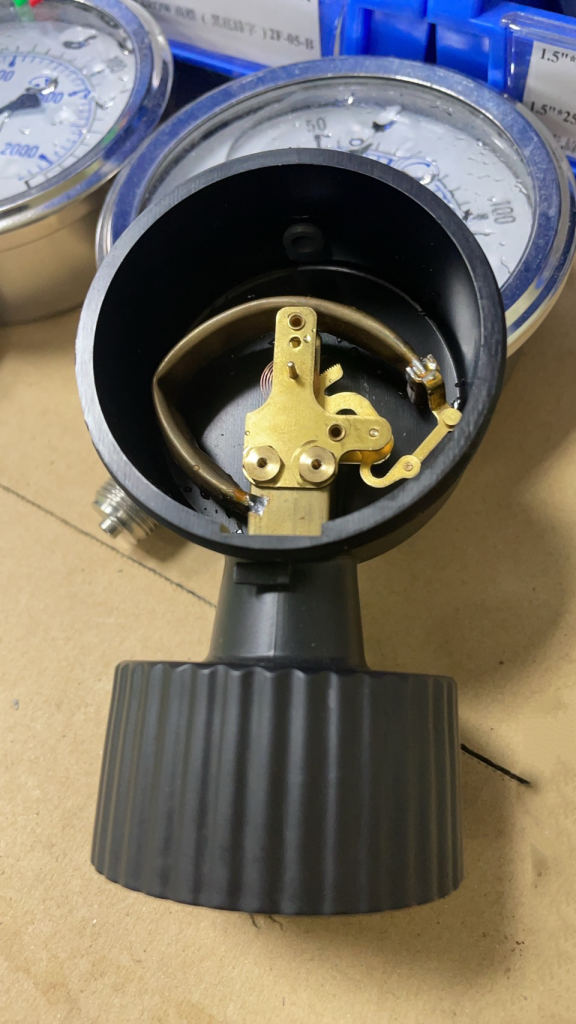
Reason:
There are many reasons for pressure spikes and overpressure, including machine malfunction, Pressure spikes and overpressure stem from various causes, including equipment malfunction, media freezing, and rapid valve actuation, all of which push the pressure value beyond the full-scale range. These conditions deform or rupture the Bourdon tube, dial, and other components, while bending the pointer and degrading overall accuracy.
Solution:
When frequent equipment failures cause an unstable pressure source, installing a stainless steel overpressure protector is recommended. This device can be set to shut off at the full-scale range to prevent instrument damage. If the pressure source remains stable but the value still exceeds the full scale, it is advisable to select a new gauge that accommodates the maximum operating pressure.
(Further Reading: PRA-SB Pressure Snubber)
2-4. Instrument clogging

Reason:
When the process media is highly prone to crystallization (such as saltwater), contains impurities (such as wastewater and sewage), or is highly viscous (such as latex and asphalt), the Bourdon tube can easily become clogged or stuck, hindering proper gauge operation.
Solution:
Clogging can be prevented by integrating a filter or a diaphragm seal to block impurities. The diaphragm seal effectively isolates the media from the Bourdon tube while maintaining measurement accuracy. To learn more about these applications, see our detailed article.
(Further Reading: In What Situation Should A Diaphragm Seal Be Integrated to Your Pressure Gauge?)
(Further Reading: Diaphragm Seals)
2-5. Instrument corrosion
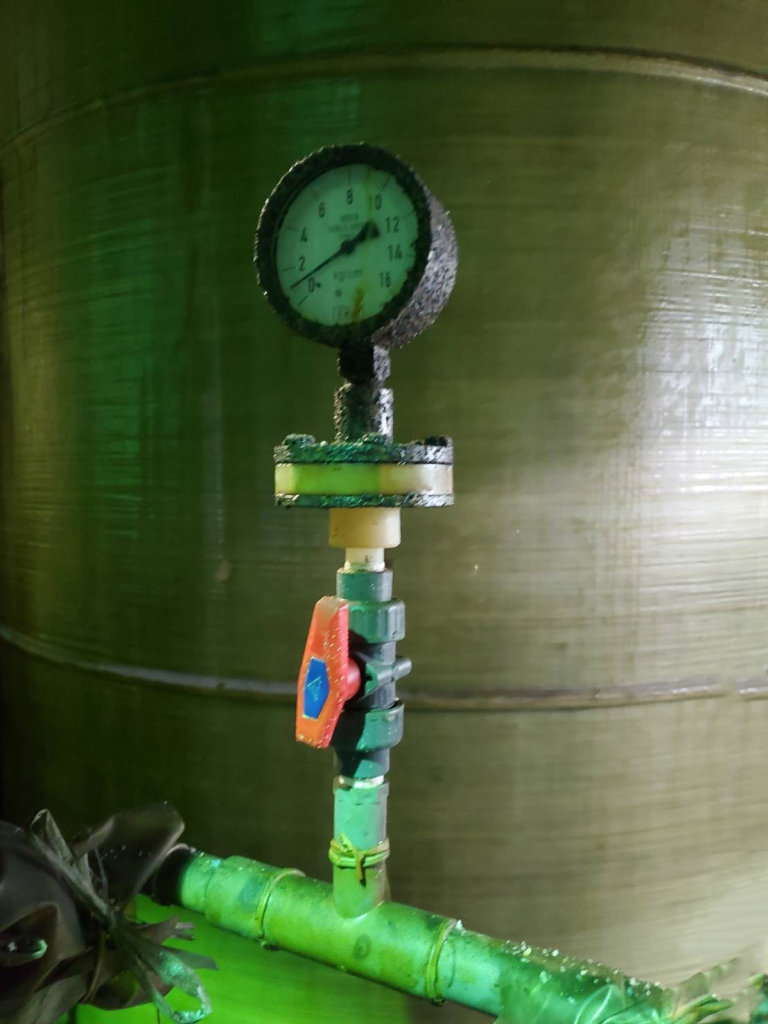
Reason:
When measuring highly corrosive media (such as hydrochloric acid, nitric acid, ammonia, and sulfuric acid), the Bourdon tube can corrode and cause leakages, which also poses a risk of injury to operators.
Solution:
Integrating a diaphragm seal or selecting wetted parts compatible with the corrosive media can effectively extend the lifetime of pressure gauges and ensure operator safety.
(Further Reading: Diaphragm Seals)
2-6. Instrument abuse / mishandling
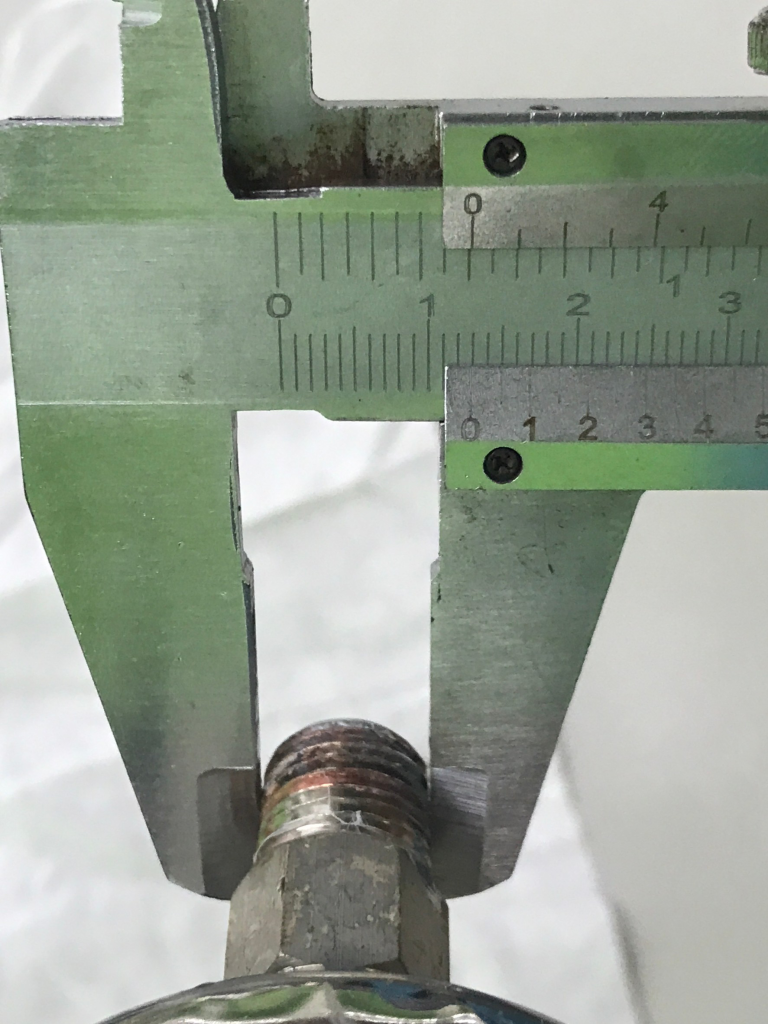
Reason:
Incorrect installation and using threads of the wrong size can cause process media leakage and a loss of instrument accuracy. Additionally, over-tightening can lead to thread abrasion and stripping.
Solution:
It is essential to select the correct thread size, type, and form before installing instruments. Always use a wrench rather than gripping the instrument case when installing and tightening the gauge. After installation, never climb on a pressure gauge or use it as a step, as this can cause irreparable damage to the instrument.
(Further Reading: Introduction to Common Thread Standards for Industrial Instruments: Four Steps to Identify Thread Specifications!)
3. Regular maintenance and servicing of pressure gauges
Understand industry standards of installation with our article on the introduction to and selection of threads. Inspecting the instruments routinely can ensure components work properly, extend the service life of instruments and maintain accuracy.