








When equipment heats up, the thermometer pointer may take time to follow. During cooling, the reading may also remain high for a while. This does not necessarily indicate a fault: heat takes time to pass from the medium to the sensing element, and the stem, installation position and thermowell all affect that delay.
First check whether a significant difference remains after the process temperature stabilizes. This helps distinguish a response that is too slow for the process from a persistent measurement error. Where rapid monitoring is required, specify the response time of the complete installed assembly as well as its range and accuracy.
Cause 1: Different Sensing Principles and Designs
Bimetallic and expansion thermometers, and electronic measurement systems using thermocouples or RTDs, have different response characteristics. Even when measuring the same medium at the same point, their readings may differ during heating or cooling. The labels “mechanical” and “electronic” alone do not establish which instrument will respond faster.
For example, an MTR.S capillary expansion thermometer separates the display from the sensing point for remote indication. This installation benefit does not automatically mean a faster response; the sensing bulb, thermowell and actual operating conditions still need to be considered.
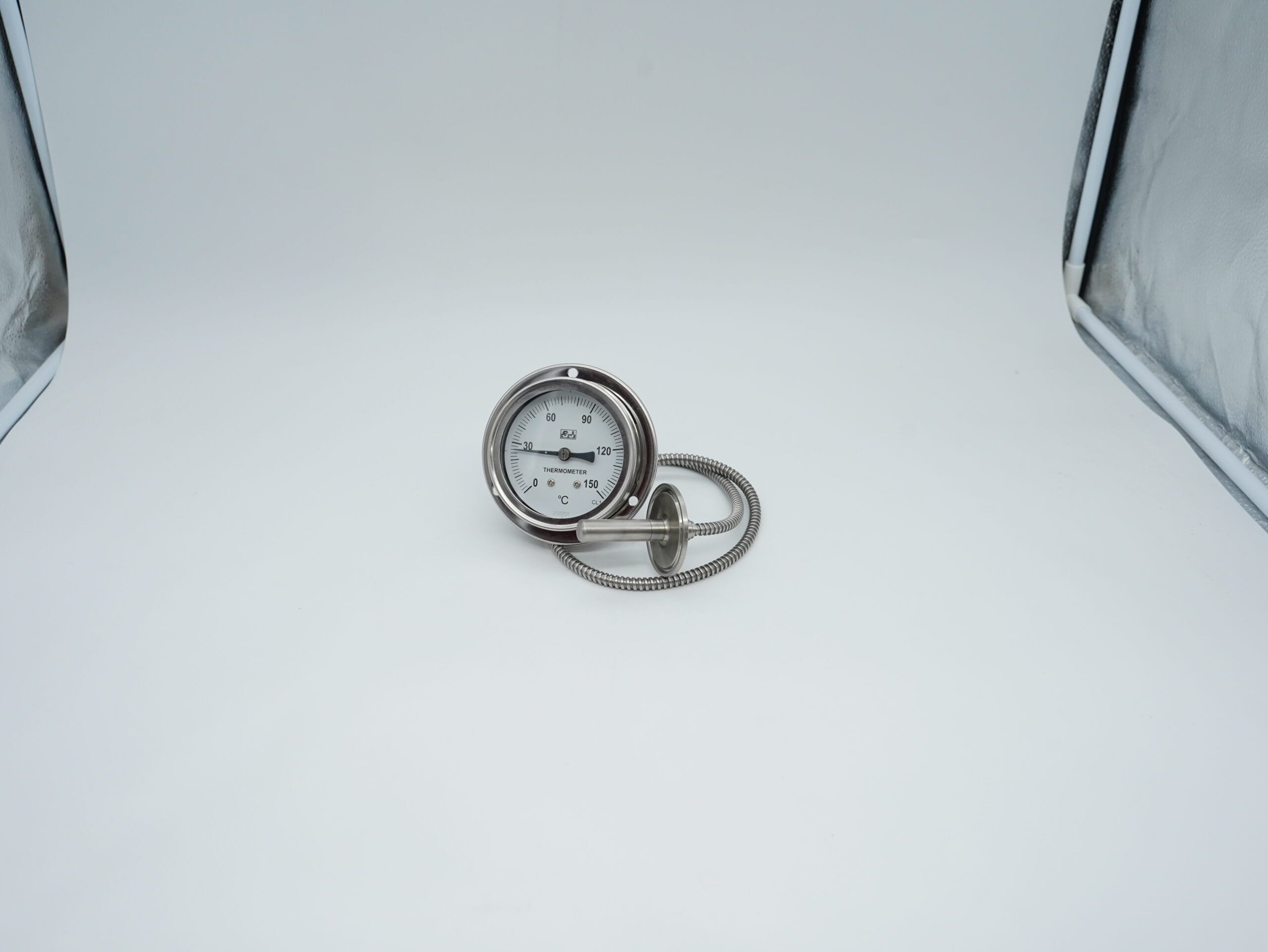
Cause 2: Stem Size and Thermal Mass
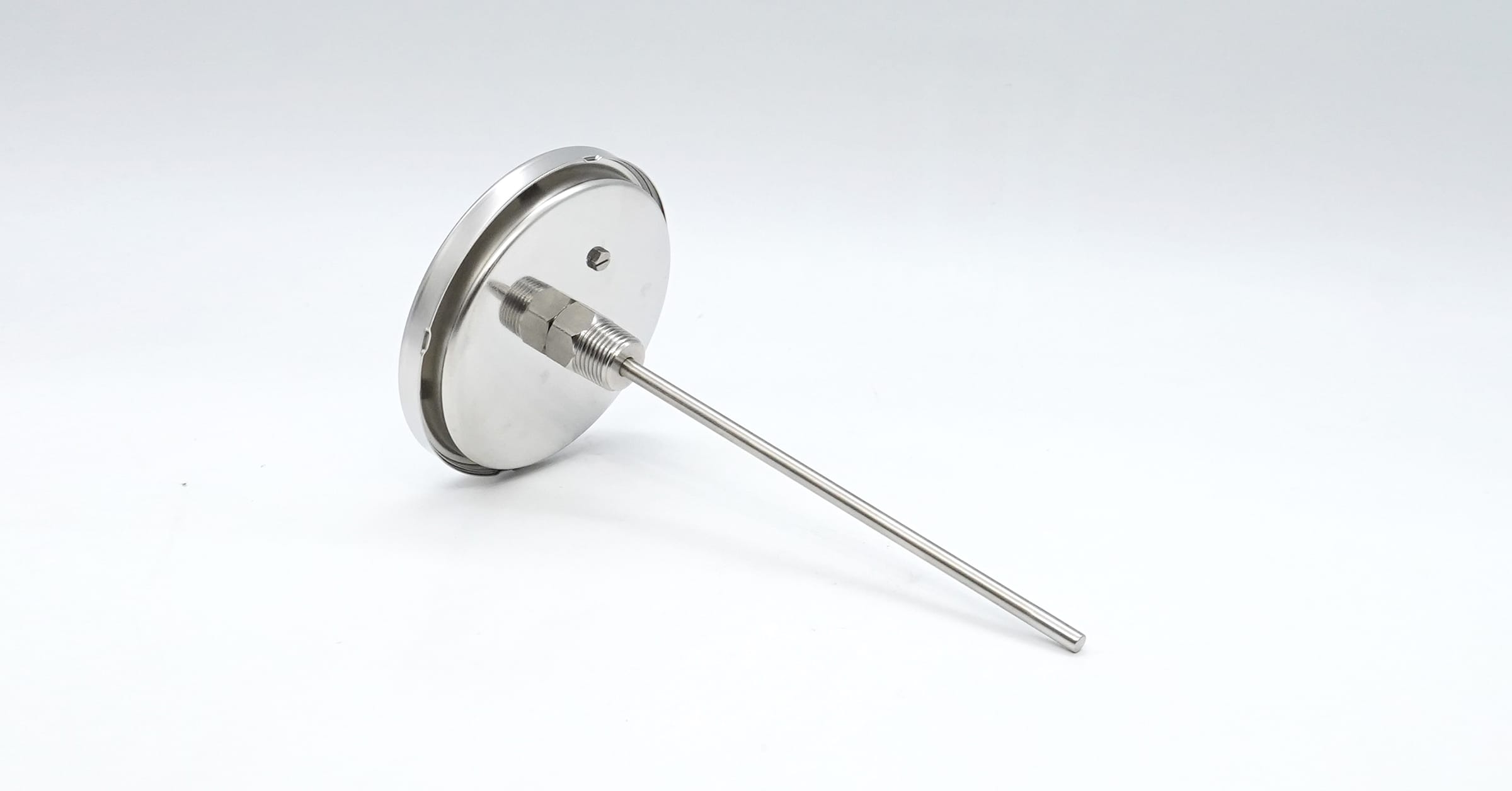
With other conditions comparable, a larger or thicker sensing stem generally takes longer to reach thermal equilibrium with the medium. A smaller stem may improve response, but pressure resistance, wear, corrosion and mechanical strength must also be assessed.
When comparing datasheets, check whether the stated response time applies to the sensing element alone or to the complete assembly with a thermowell. These are different configurations, and their test results cannot be applied interchangeably to an installation.
Cause 3: Insufficient Immersion or an Unsuitable Measuring Position
If the active sensing zone is not adequately immersed in representative process medium, the pipe wall or ambient air may influence the reading. This can cause a high or low reading and delay the indication of process changes. A thread that fits does not establish that the sensing position is correct.
Determine immersion depth from the manufacturer’s requirements, the active sensing length, pipe diameter and thermowell dimensions; there is no universal depth for every thermometer. Where a different viewing angle is needed, an MTB.S_BA adjustable-angle bimetallic thermometer can be considered while maintaining the required sensing position.
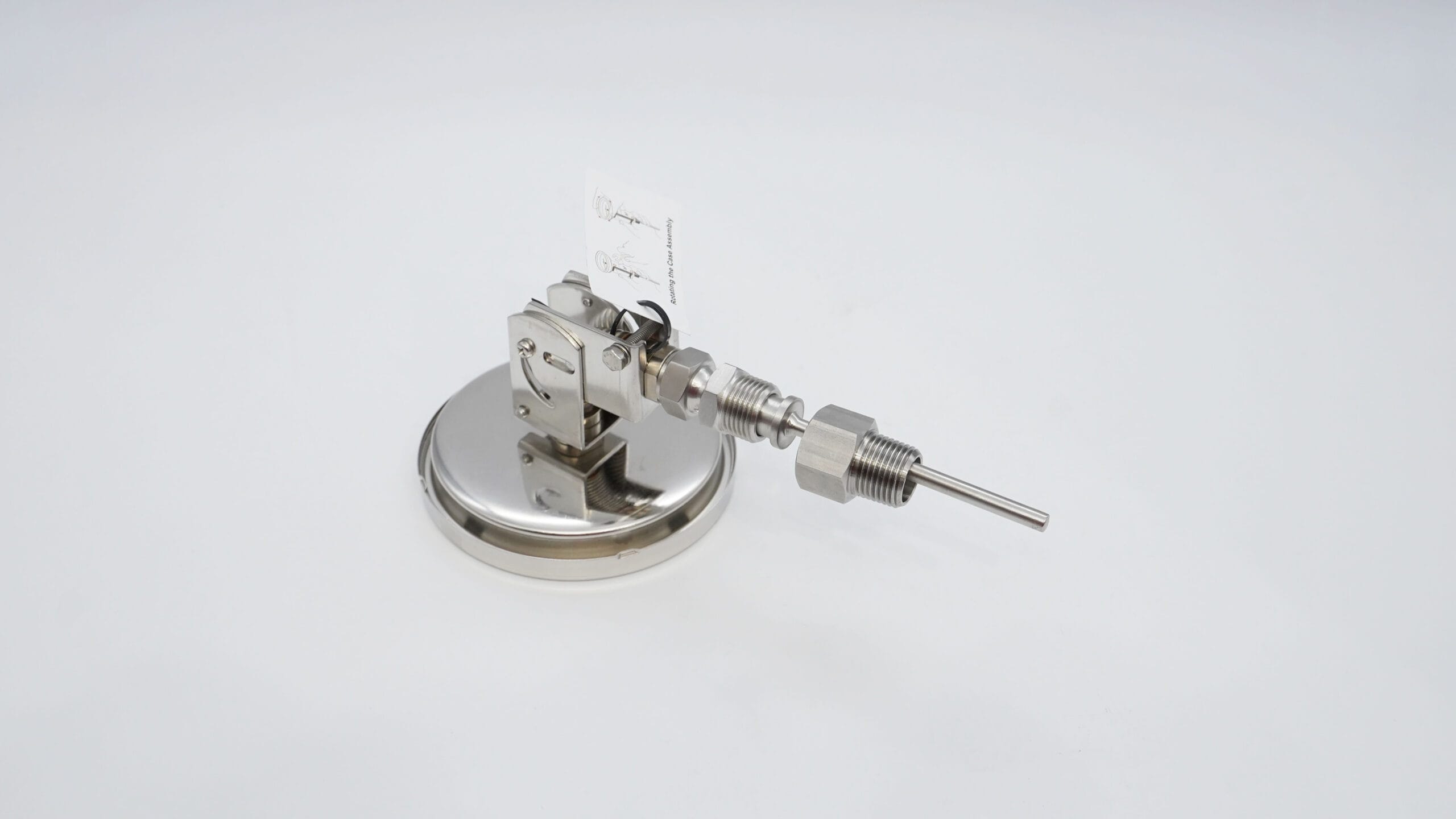
Cause 4: Low Flow or a Stagnant Measuring Point
Response also depends on how effectively the medium transfers heat to the stem. Stagnant areas in a vessel, inadequate mixing, low-flow piping and viscous media can all delay the temperature change reaching the measuring point. Response times in gases should not be compared directly with those in flowing liquids.
Check whether the measuring position represents the process temperature before deciding to replace the instrument. Any change to position or flow conditions should also account for the resulting fluid forces and vibration risk at the thermowell.
Cause 5: Heat Transfer Through the Thermowell
A thermowell isolates the process medium and protects the sensing stem, but adds a heat-transfer path that usually increases the assembly’s response time. The effect depends on its material, wall thickness and tip geometry, as well as the fit between the stem and thermowell.
When selecting a thermowell such as the TWC threaded thermowell, check the process connection, bore, usable depth and sensing-stem dimensions together. If response time is specified, ask the manufacturer to assess the complete configuration. Do not thin the thermowell or add heat-transfer compounds without an approved design.
How Can You Improve an Industrial Thermometer’s Response?
- Define the symptom: record readings during heating, cooling and stable operation, using a reference measurement at the same location and time.
- Check the installation: verify the active sensing zone, immersion depth, measuring position and fit within the thermowell.
- Define the requirement: state the acceptable delay and whether the measurement is used for local indication, control or alarms.
- Assess the complete assembly: select the sensing element and thermowell while meeting pressure, corrosion and mechanical-strength requirements.
- Verify under consistent conditions: compare results with the same medium, flow, immersion depth and thermowell configuration.
If response is specified as t90, it means the time needed to indicate 90% of the total temperature change. For a change from 20°C to 100°C, the 90% point is 92°C, not 90°C. Confirm the test conditions alongside the time value when requesting a quotation.
International Standards References
- ASME PTC 19.3-2024: a reference for temperature measurement methods, instrument selection and use when reviewing the measurement arrangement.
- EN 13190:2001: requirements and tests for industrial dial thermometers, with recommendations for selection and installation.
- ASME B40.200: terminology, construction, installation and test guidance covering bimetallic, filled-system and liquid-in-glass thermometers, among other topics.
- ASME PTC 19.3 TW-2016 (R2025): a mechanical-design reference for bar-stock thermowells within its scope. It excludes sensor thermal equilibrium relative to the process stream and cannot, by itself, demonstrate an acceptable response time.
Confirm the applicable scope and edition against the equipment, process and purchase specification. Referencing a standard does not automatically certify a product.
Frequently Asked Questions
Does a Slow Response Mean the Thermometer Is Inaccurate?
Not necessarily. Slow response is a delay during a changing temperature; the final reading may still be within the permissible error. If a high or low reading persists after stabilization, check installation and calibration separately.
Is Removing the Thermowell Always Better?
Reducing the heat-transfer path may improve response, but removes the thermowell’s process isolation and mechanical protection. For high-pressure, corrosive, abrasive or high-velocity service, verify the design requirements before considering removal.
Conclusion
When an industrial thermometer responds slowly, review the sensing principle, dimensions, immersion depth, flow conditions and thermowell fit together. Define how fast the process needs the measurement to respond, then verify the complete assembly against that requirement.
Contact SJ Gauge with the medium, operating temperature and pressure, flow velocity, pipe diameter, and current stem and thermowell dimensions. Include the required response time so our team can help assess a suitable configuration.
Further Reading: Inaccurate Industrial Thermometer Readings: Check Immersion Depth and Installation