








Summary: A JIS flange specification must be read as a complete combination of standard number, nominal size, pressure class, material, facing and bolt pattern. A “10K” marking identifies a JIS pressure class; it is not enough by itself to approve a flange for a process.
In Taiwan and many Asian industrial plants, JIS flanges are common on pumps, vessels, piping and pressure instruments. JIS B 2220 covers steel pipe flanges, while other materials may be governed by different JIS documents. Always use the standard and edition stated in the project specification or approved drawing.
What Does 10K Mean on a JIS Flange?
10K is the pressure-class designation of a JIS flange series. It is historically associated with kilogram-force per square centimetre, but it should not be treated as a universal allowable working pressure. The permitted pressure depends on the flange material, temperature, construction and the applicable JIS pressure-temperature rules.
For example, “JIS 10K 50A” identifies a 10K-series flange with nominal size 50A. It does not confirm the facing, material, exact dimensions or suitability for the actual fluid and temperature.
How to Read a JIS Flange Specification
- Standard: confirm the exact JIS document and edition.
- Nominal size: identify the A-size or DN equivalent stated on the drawing.
- Pressure class: identify 5K, 10K, 16K, 20K or the specified series.
- Material: verify carbon steel, stainless steel, cast iron or another required material.
- Facing: match the gasket-contact surface and mating flange.
- Dimensions: check outside diameter, bolt-circle diameter, hole count, hole diameter, thickness and bore.
Common JIS Pressure Classes
| JIS class | Typical interpretation | Selection note |
|---|---|---|
| 5K | Lower-pressure series | Verify material, temperature and service before use. |
| 10K | Widely used general industrial series | Do not assume “10K” alone proves the allowable pressure. |
| 16K / 20K | Higher-pressure series | Check the exact dimensional and pressure-temperature requirements. |
This table is a reading guide, not a pressure rating chart. For final design, use the official JIS document and the project’s design pressure, design temperature and material specification.
JIS Flanges for Pressure Gauges and Diaphragm Seals
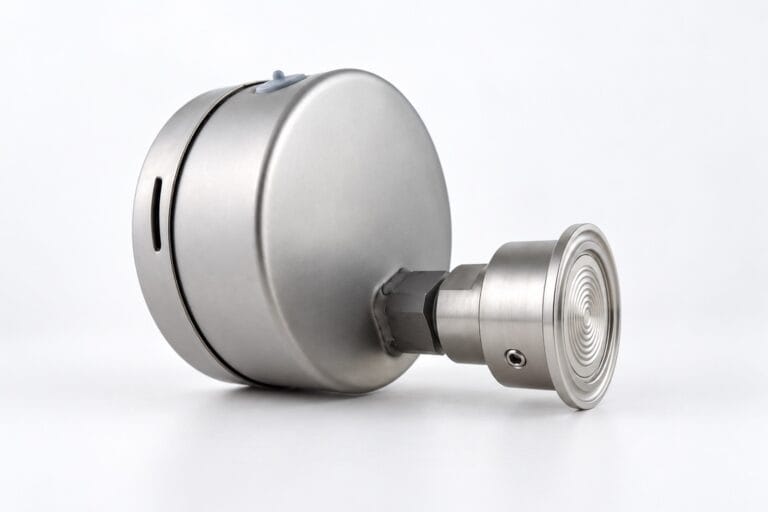
A pressure gauge is often connected to a JIS process flange through a diaphragm seal. In addition to the flange pattern, the supplier must check the effective diaphragm diameter, measuring range, fill fluid, wetted materials, capillary length and installation orientation.
Low-pressure ranges generally need a larger effective diaphragm area to reduce error from diaphragm stiffness. Corrosive, viscous, crystallizing or sanitary media may also require special diaphragm materials, coatings, linings or flushing connections.
JIS, ASME and DIN/EN Flanges Are Different Systems
JIS commonly uses K classes, ASME uses pressure classes such as Class 150 and Class 300, and DIN/EN systems use PN designations. Similar nominal pipe sizes do not guarantee matching outside diameters, bolt circles, hole counts, facing or pressure-temperature ratings. Use an engineered adapter only after both sides have been fully verified.
JIS Flange Selection Checklist
- Exact JIS standard and edition
- Nominal size and pressure class
- Flange type, facing and gasket
- Material and corrosion compatibility
- Design pressure, temperature and pressure spikes
- Bolt pattern and approved dimensional drawing
- Instrument range, diaphragm size and installation arrangement
Frequently Asked Questions
Does JIS 10K mean the flange can always operate at 10 bar?
No. 10K is a class designation. The allowable pressure changes with material, temperature and the governing standard. Confirm the applicable pressure-temperature requirements.
Are JIS 10K and ASME Class 150 flanges interchangeable?
Do not assume so. Bolt patterns, diameters, facing and ratings can differ. Compare approved drawings and use a properly engineered transition when required.
What information should I provide for a JIS flanged pressure gauge?
Provide the JIS standard, size, K class, facing, material, process fluid, pressure range, temperature, installation drawing and any diaphragm-seal or capillary requirements.
Conclusion
To read a JIS flange correctly, start with the standard, nominal size and K class, then verify material, facing, dimensions and service conditions. SJ Gauge can review JIS flange connections and recommend a compatible pressure gauge, diaphragm seal or remote-seal arrangement.
Need help confirming a JIS flange specification? Contact SJ Gauge with the flange marking, drawing and process conditions.
Standards reference
Refer to the current edition of JIS B 2220, Steel pipe flanges, and the project specification. Purchase the official standard when complete requirements or dimensional tables are needed.