








A pressure gauge that fails soon after installation is not necessarily a product quality problem. Equipment vibration, pressure pulsation, momentary overpressure, and an incorrect measuring range can all cause premature wear inside the gauge.
If several gauges have failed at the same installation point, do not just replace the instrument. Investigate the site conditions that are causing the repeated damage.
Common Causes of Pressure Gauge Failure
Continuous Mechanical Vibration
Vibration from pumps, compressors, or motors can be transmitted continuously into the pressure gauge, accelerating wear on its gears, linkages, and pointer bearings.
Pressure Pulsation
Pressure in reciprocating pumps and hydraulic equipment may rise and fall rapidly, causing the pointer to swing repeatedly through a wide arc and increasing the load on the internal mechanism.
Momentary Overpressure or Water Hammer
Rapid valve closure, pump start-stop cycles, or sudden changes in pipeline velocity can create pressure spikes that deform the pressure-sensing element.
Incorrect Pressure Range
If normal operating pressure stays close to full scale, the gauge carries a higher continuous load and has less margin for momentary overpressure.
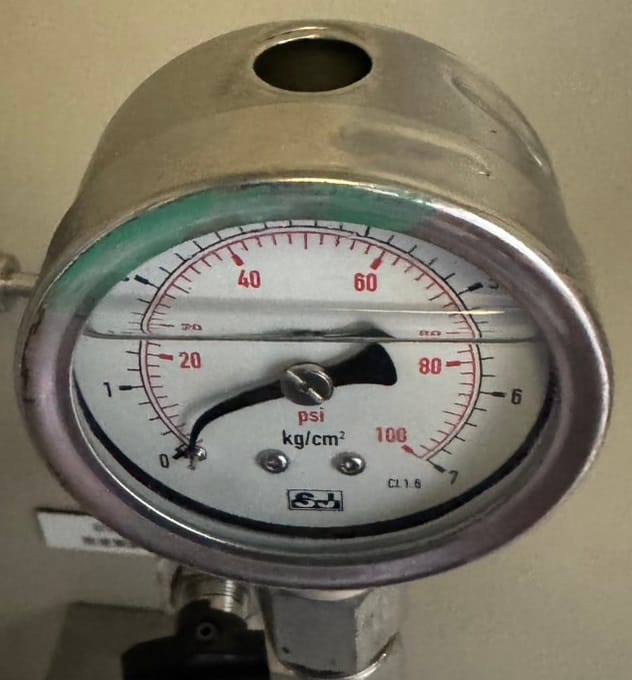
Can Liquid Filling Extend Pressure Gauge Service Life?
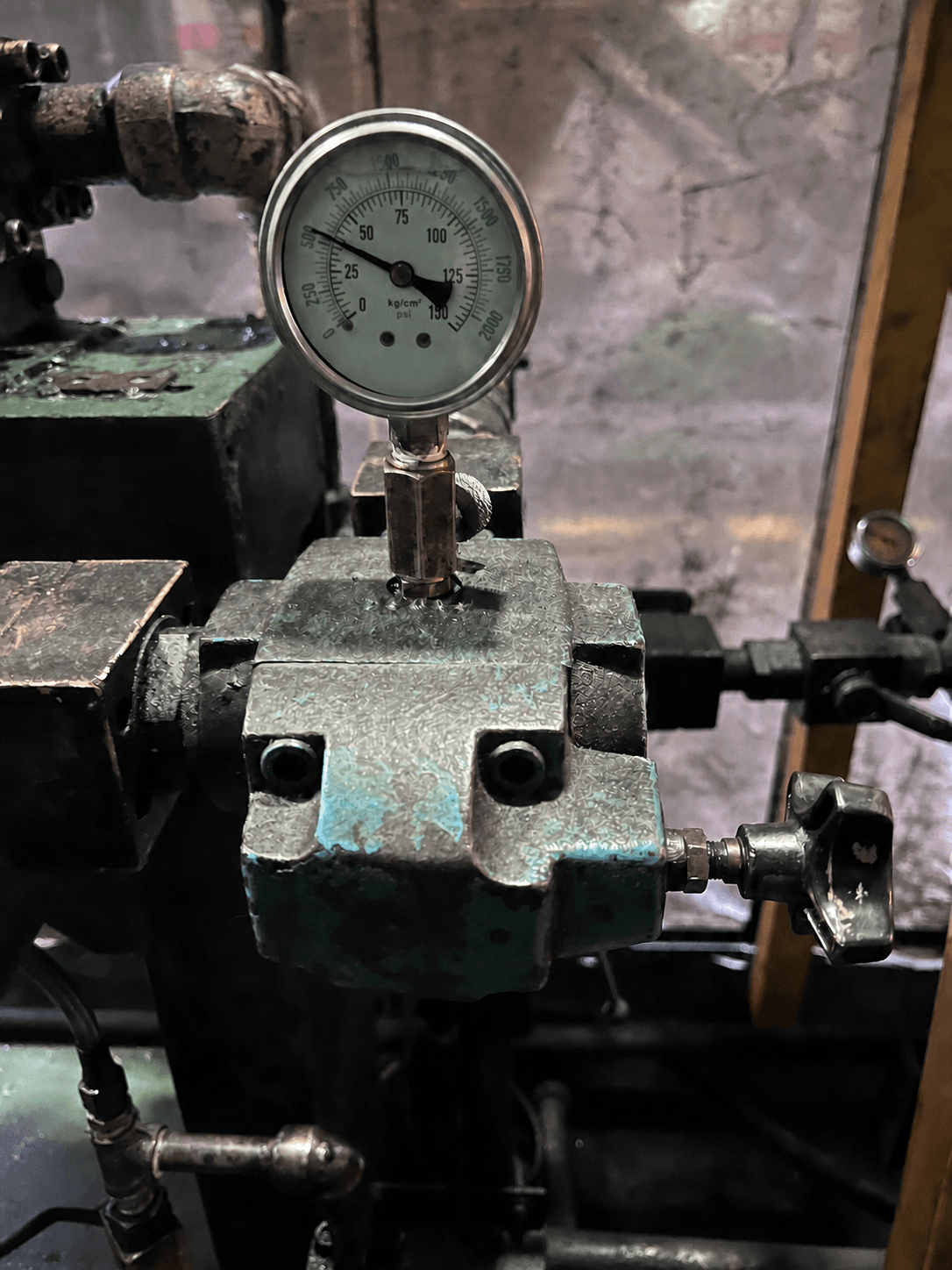
A liquid-filled pressure gauge contains glycerin or silicone oil inside the case. The fill fluid stabilizes the pointer, lubricates the movement, and reduces wear caused by vibration.
It is well suited to normal mechanical vibration and pressure pulsation, but it cannot withstand every overpressure event or water-hammer shock. If severe pressure impact is causing the damage, a pressure snubber, restrictor, or other piping protection may also be required.
(Related Product: PRA-SB | Pressure Snubber)
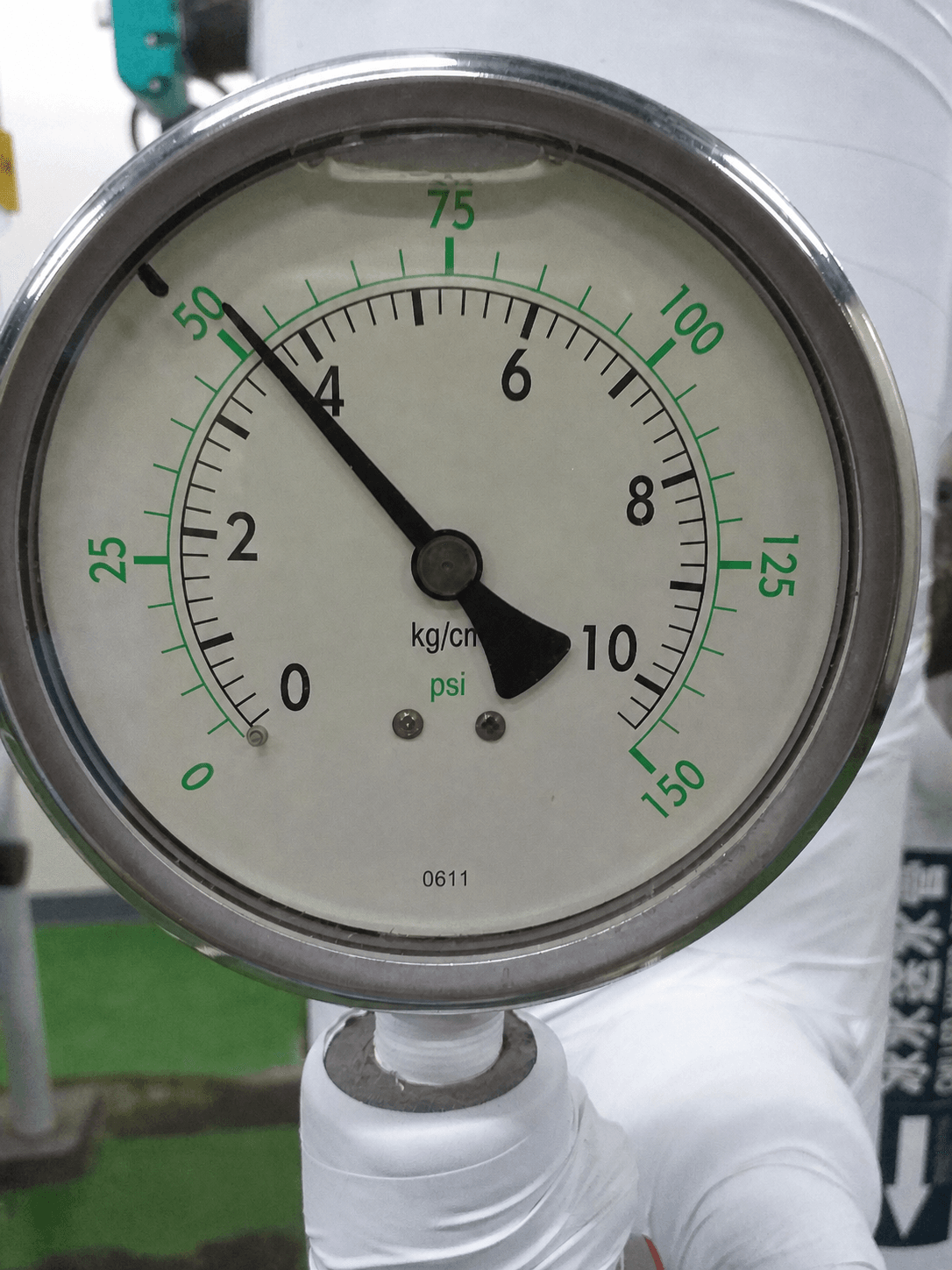
When Should a Pressure Gauge Be Replaced?
- The pointer does not return to zero after shutdown and pressure release.
- The pointer sticks or moves unevenly.
- Readings at the same pressure differ significantly.
- The case, window, or process connection is damaged.
- A large amount of fill fluid has leaked.
- Calibration results exceed the allowable error.
If the gauge is used for equipment safety or quality control, visual inspection alone is not enough. Calibrate it regularly according to the facility’s maintenance and quality procedures.
International Standards References
The following standards can serve as references for selecting, installing, or verifying pressure gauges for this application:
- EN 837-1: Can be used to review requirements for the accuracy, durability, vibration resistance, and performance testing of Bourdon tube pressure gauges.
- ASME B40.100-2022: Covers pressure gauge safety, construction, installation, and testing, including pressure gauge accessories such as snubbers.
- ISO/IEC 17025:2017: When instrument drift must be evaluated, request traceable results from a calibration laboratory that meets the competence requirements of this standard.
Standards note: The applicable scope, edition, and certification documents should be confirmed according to the equipment location, process risk, and procurement specifications. Citing a standard does not mean that a product is automatically certified, nor does it replace manufacturer confirmation of the selected model.
Frequently Asked Questions
Is a liquid-filled pressure gauge always more durable?
It is usually advantageous in environments with vibration or pulsation. However, liquid filling still cannot prevent damage if the pressure range, material, or installation method is incorrect.
How often should a pressure gauge be replaced?
There is no universal interval. Usage frequency, operating pressure, vibration, temperature, and safety requirements all affect service life. Base the replacement schedule on site calibration results and the facility’s risk-management program.
Conclusion
When pressure gauges fail repeatedly, check vibration, pulsation, overpressure, pressure range, and installation position together. A liquid-filled pressure gauge can reduce wear caused by normal vibration, but correct selection and piping protection are still essential.
Repeated failures at the same location? Send SJ Gauge your pressure range, equipment type, and observed damage. Our team can help identify a more suitable pressure gauge configuration.
(Further reading: Why Is My Pressure Gauge Pointer Vibrating? Can a Liquid-Filled Pressure Gauge Help?)