








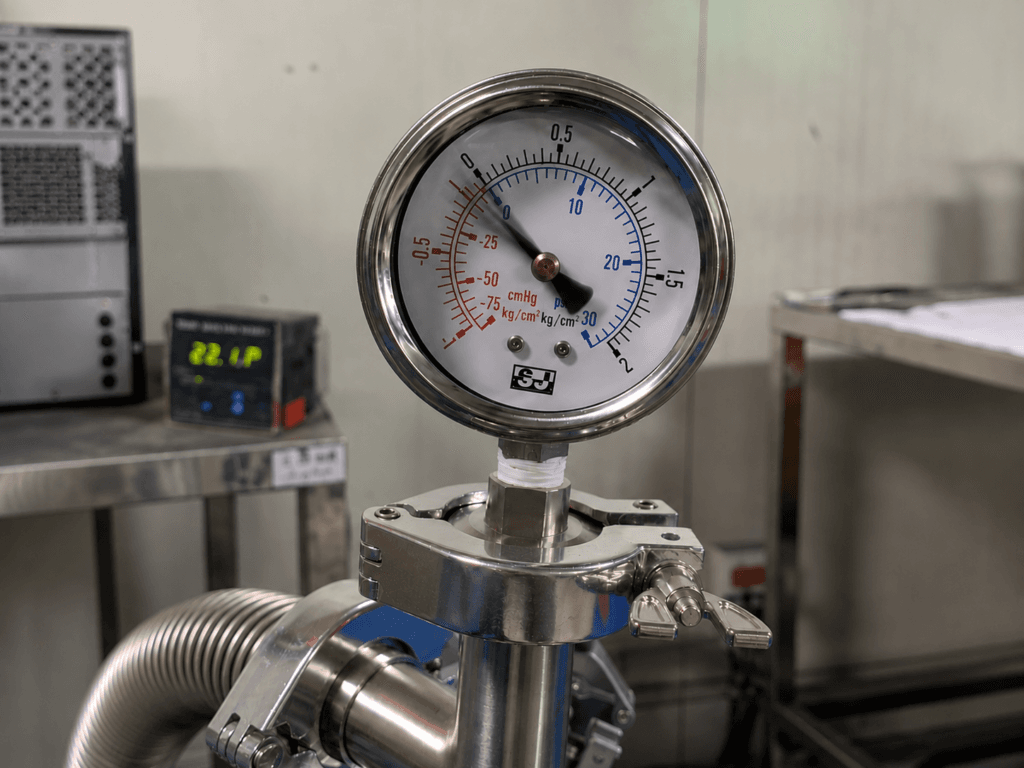
A pressure gauge pointer that keeps vibrating is most often caused by equipment vibration or rapid pressure pulsation in the piping. Besides making readings difficult to see, prolonged vibration can accelerate wear on the gauge’s gears, linkages, and bearings.
A liquid-filled pressure gauge uses glycerin or silicone oil inside the case to damp pointer movement. This is a common solution for pumps, air compressors, and hydraulic equipment. However, if the system experiences severe water hammer or pressure spikes, liquid filling alone may not fully solve the problem.
Why Does a Pressure Gauge Pointer Vibrate?
Common causes include:
- Continuous vibration from motors, pumps, or compressors
- Periodic pressure fluctuations generated by reciprocating pumps
- Pressure shocks caused by rapid valve opening or closing
- A pressure range that is too low, making the pointer overly sensitive to changes
- A gauge mounted directly at a location with severe vibration
If the pointer moves only briefly during equipment startup, it may simply reflect a normal pressure change. If it continues to vibrate rapidly during operation, the source of the vibration and the system pressure conditions should be checked.
What Can a Liquid-Filled Pressure Gauge Improve?
The fill fluid inside the gauge case provides a damping effect that reduces rapid pointer movement. It also lubricates the internal mechanism, helps reduce wear, and minimizes condensation or fogging on the gauge window.
Glycerin is commonly used in general industrial environments. Silicone oil may be considered for low-temperature, outdoor, or wide-temperature-range applications. A higher-viscosity fill fluid generally provides stronger damping, but it can also slow pointer response. Higher viscosity is therefore not always the better choice.
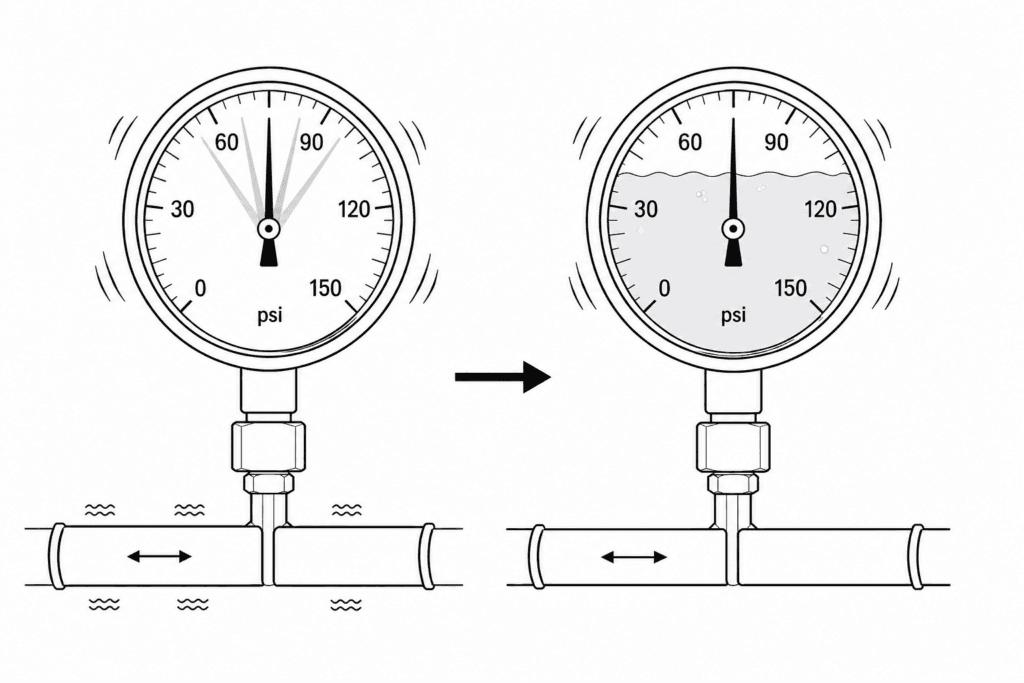
What If the Pointer Still Vibrates After Switching to a Liquid-Filled Gauge?
If the pointer still vibrates noticeably after installing a liquid-filled pressure gauge, consider the following steps:
- Check whether the selected pressure range is appropriate.
- Install a pressure snubber or flow-restricting device.
- Relocate the pressure gauge away from the primary vibration source.
- Inspect the piping system for water hammer.
- Re-evaluate the fill-fluid viscosity and pressure gauge construction.
Liquid filling primarily protects the gauge’s internal mechanism. It cannot replace proper pressure control in the piping system.
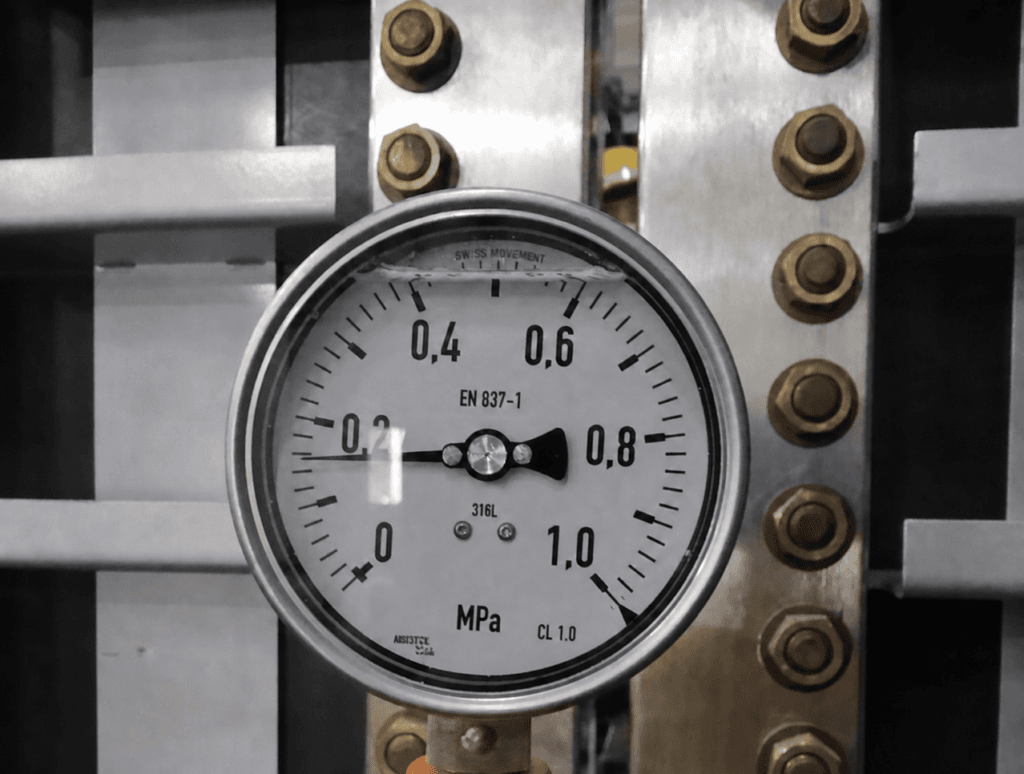
International Standards References
The following standards can serve as references for selecting, installing, or verifying pressure gauges for this application:
- EN 837-1: Applies to Bourdon tube mechanical pressure gauges and covers dimensions, accuracy, durability, and testing. Its scope also includes liquid-filled pressure gauges.
- ASME B40.100-2022: Covers the safety, construction, installation, and testing of pressure gauges and accessories. It can be used as a reference when selecting and evaluating gauges for vibrating environments.
Standards note: The applicable scope, edition, and certification documents should be confirmed according to the equipment location, process risk, and procurement specifications. Citing a standard does not mean that a product is automatically certified, nor does it replace manufacturer confirmation of the selected model.
Frequently Asked Questions
Does pointer vibration mean the pressure gauge is broken?
Not necessarily. Equipment vibration or pressure pulsation can also cause the pointer to vibrate. However, if the pointer does not return to zero after shutdown, the reading is clearly offset, or the pointer sticks, the gauge should be inspected.
Can I convert a dry pressure gauge into a liquid-filled gauge myself?
This is not recommended. Case sealing, fill volume, fluid viscosity, and the pressure-compensation design can all affect readings. Choose a liquid-filled model designed and supplied by the manufacturer.
Conclusion
When a pressure gauge pointer vibrates continuously, first determine whether the cause is mechanical vibration, pressure pulsation, an unsuitable pressure range, or water hammer. A liquid-filled pressure gauge can improve readability and durability in normal vibrating environments. Severe pulsation may also require a pressure snubber or a change in installation position.
Not sure whether your application needs glycerin, silicone oil, or a pressure snubber? Send SJ Gauge your pressure range, equipment type, and vibration conditions. Our team can help evaluate the most suitable configuration.
(Further reading: What to Do When Liquid-Filled Pressure Gauges Don’t Work?)